Track your positions
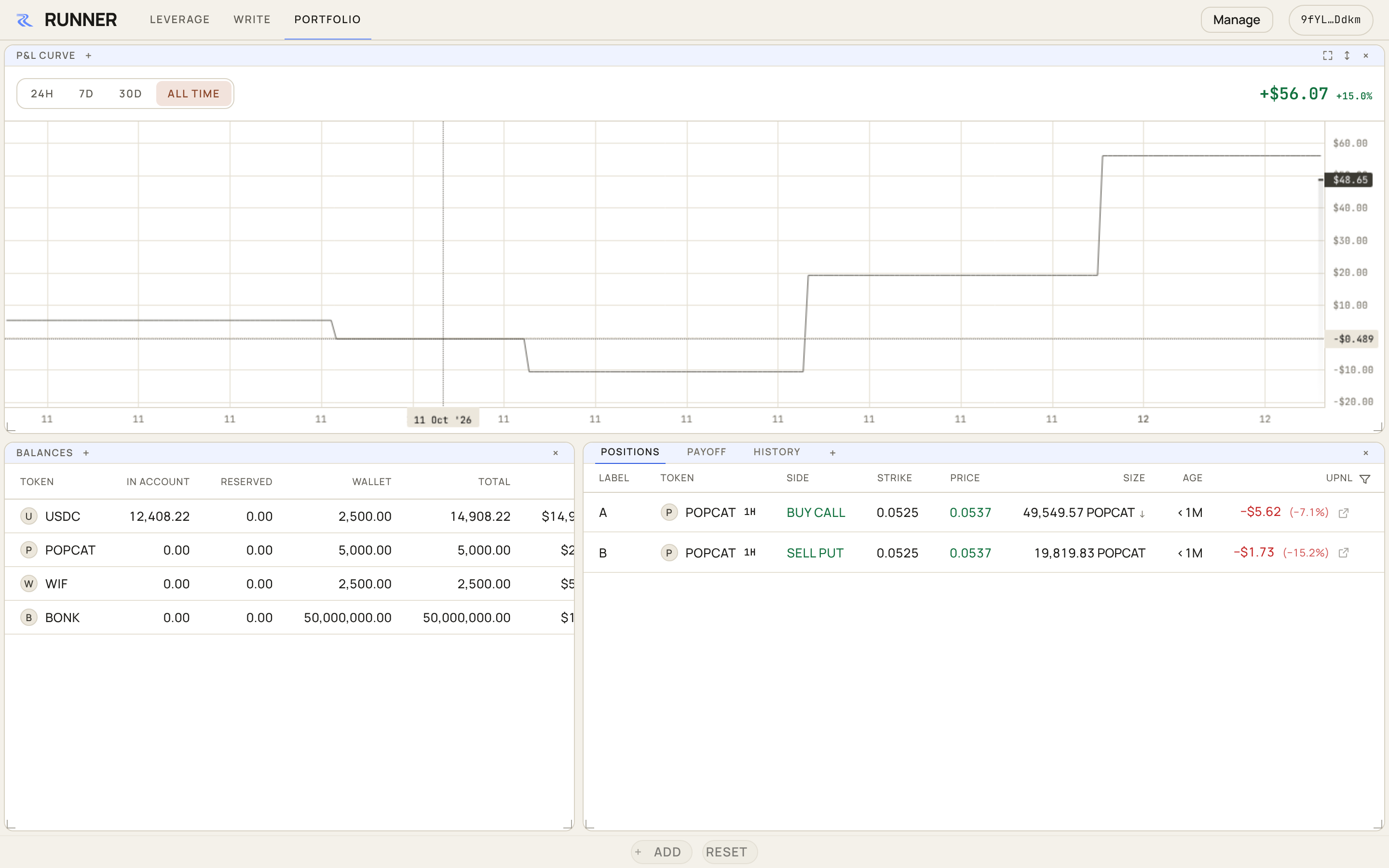
Everything you hold is in the positions table under the chart. Each row shows the token, what you did (BUY CALL, SELL PUT …), the strike, the current price, and how much is left after how long.

Size, value and chart labels
SIZE shrinks. It is how many tokens your option still covers, and it halves every half-life whether you are watching or not. CARRY says how fast, in tokens per hour. It is a cost on what you bought and income on what you wrote.
uPNL is what it is worth to you now. It compares what you would get if you closed it now with what you paid. See What an option is worth.
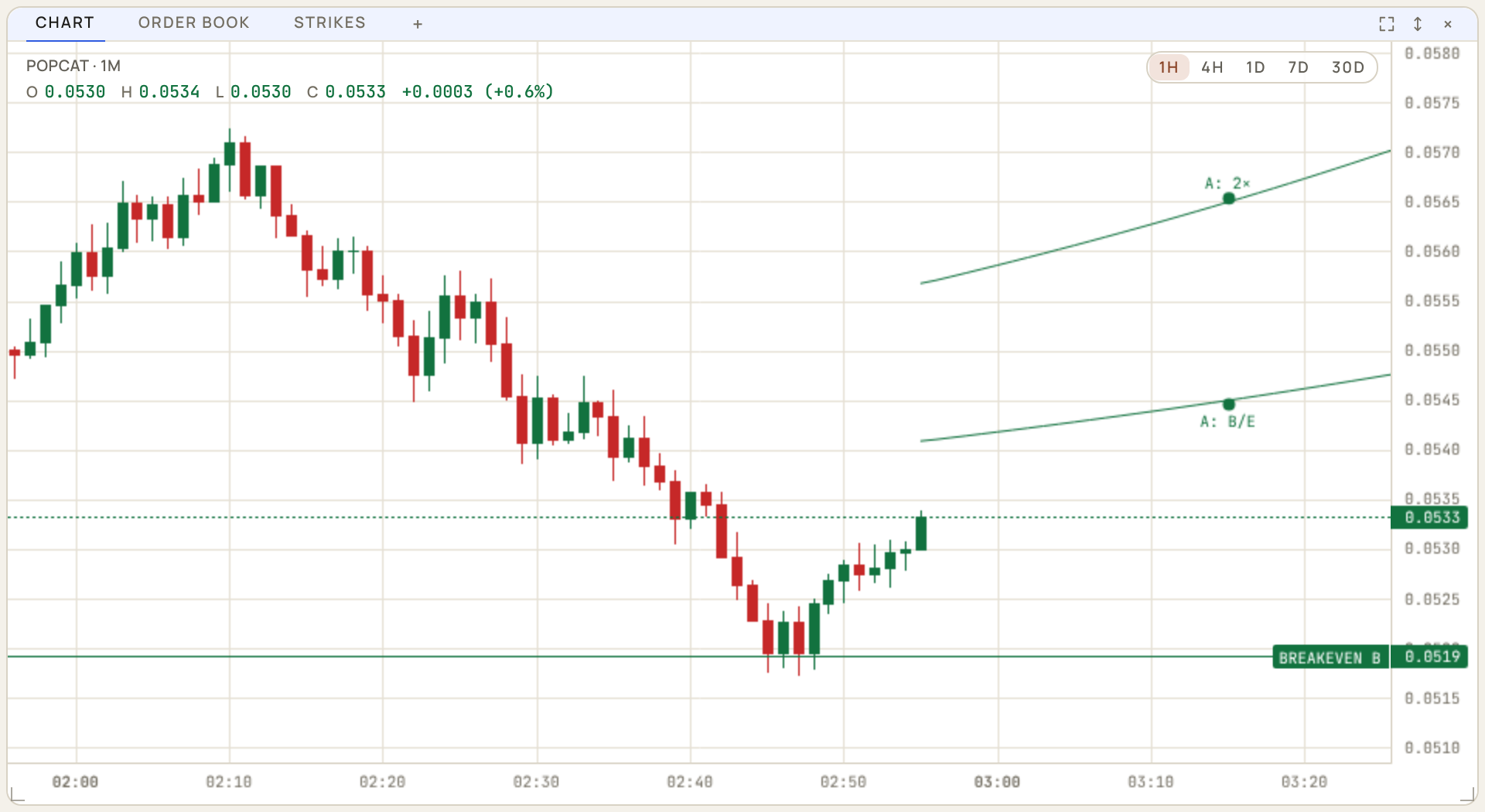
The letter is its name on the chart. Row A's break-even and payout lines on the chart are marked A. A: B/E is the price you need to get your money back and A: 2× the price that doubles it. Both climb as time passes because the option is shrinking. A position keeps its letter until it closes.
No expiry, no liquidation
There is no date by which you must act, and nothing can liquidate it. You paid in full, so nothing you hold can be closed out against you. When you are done with it, close it.
Share a trade
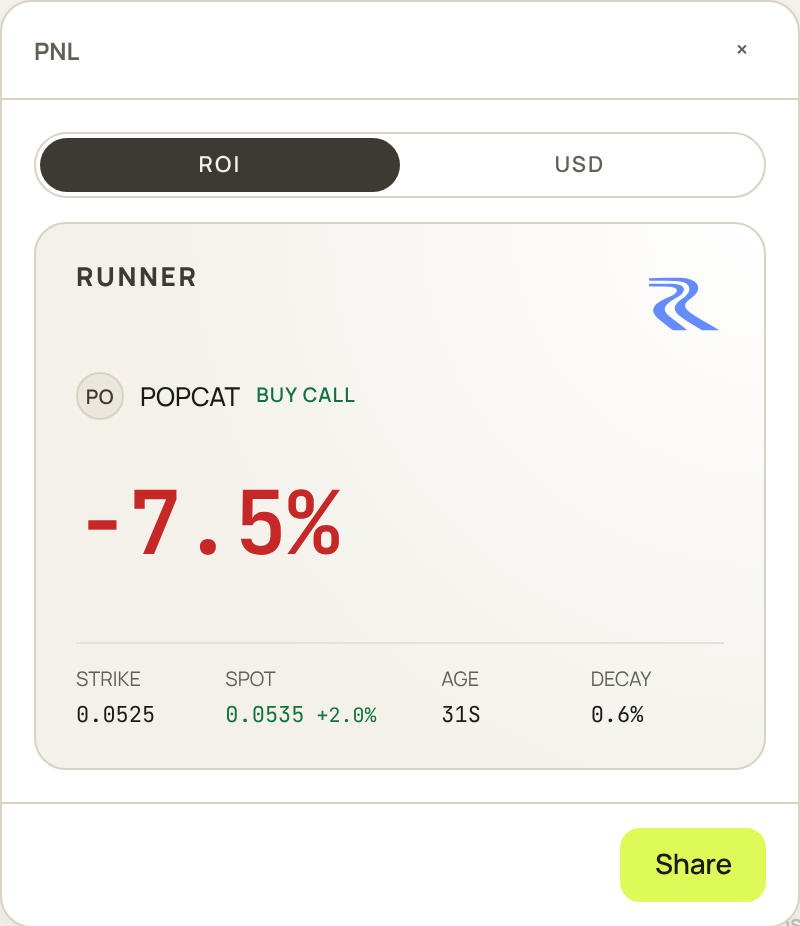
The arrow next to uPNL makes a card of the position, its return and its strike, ready to post.
Balances, history and portfolio
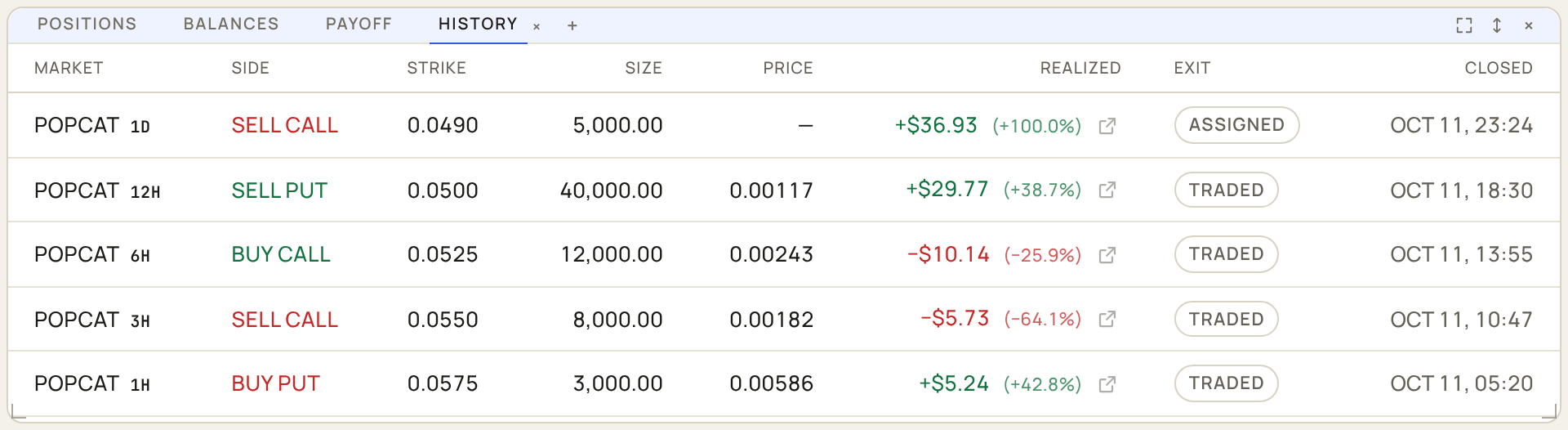
The other tabs under the chart show your balances in your trading account and wallet, what your positions on this token pay across prices, and the history of what you have closed and what it made or lost — with every deposit, withdrawal and sweep on the same list, so the cash and the P&L reconcile from one ledger.
The Portfolio page, at the top of the app, puts it all on one screen: what the account is worth and what is free and reserved, as the venue values them; your P&L — or the account's value — over time; every resting order on every market with the collateral it locks; and the positions, balances and history under them.